Wordwright
A private, two-player word game for the web. No ads, no tracking.
My wife and I wanted to play a word game together across the day — a move at lunch, a move before bed. Every option in the app stores turned out to be the same game wrapped in a business model: a video ad between turns, a currency you can buy, a daily streak nagging you to come back, a login tied to a social network, and an analytics SDK watching the whole thing. The actual game underneath is seventy years old and has about two hundred lines of rules in it.
So I built Wordwright. Two people, a four-character room code, a 15×15 board, and nothing else. It runs in a browser, installs to a phone's home screen, and pokes you when it's your turn. There is no company behind it and nothing to sell you, which is the entire feature list.
Playing
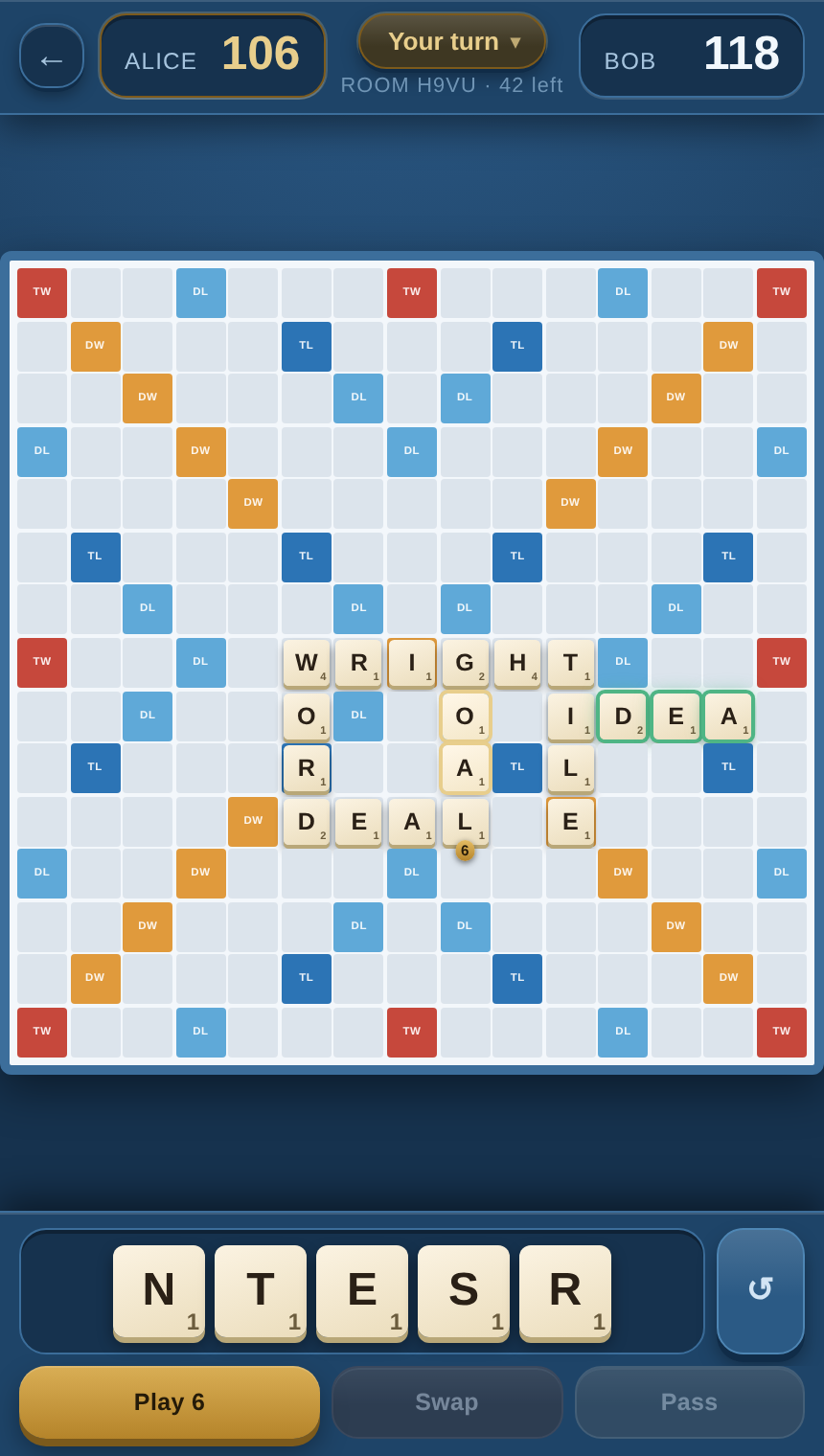
Tiles are dragged onto the board with a hand-rolled drag layer — browsers' native drag-and-drop is unreliable on touchscreens, and this is a game played mostly with a thumb. What rides under your finger is the tile itself, snapping from square to square, and it only ever advances to a square it would actually fit in, so dragging across a word leaves it parked where it last made sense rather than following the pointer somewhere it can't go.
Every line you form is scored live as you place tiles: a small bubble hangs off the end of each word and the running total sits on the Play button, so you can try a word, see what it's worth, and take it back without committing to anything. A word the dictionary doesn't know — it's NWL2023, the North American tournament list, about 196,000 of them — turns its bubble red before you press a thing.
The last word played keeps a standing green outline until somebody plays again. That sounds like a small thing and it's the feature I use most: you open the board hours after the notification arrived, and a board only tells you what's on it, never what's new.
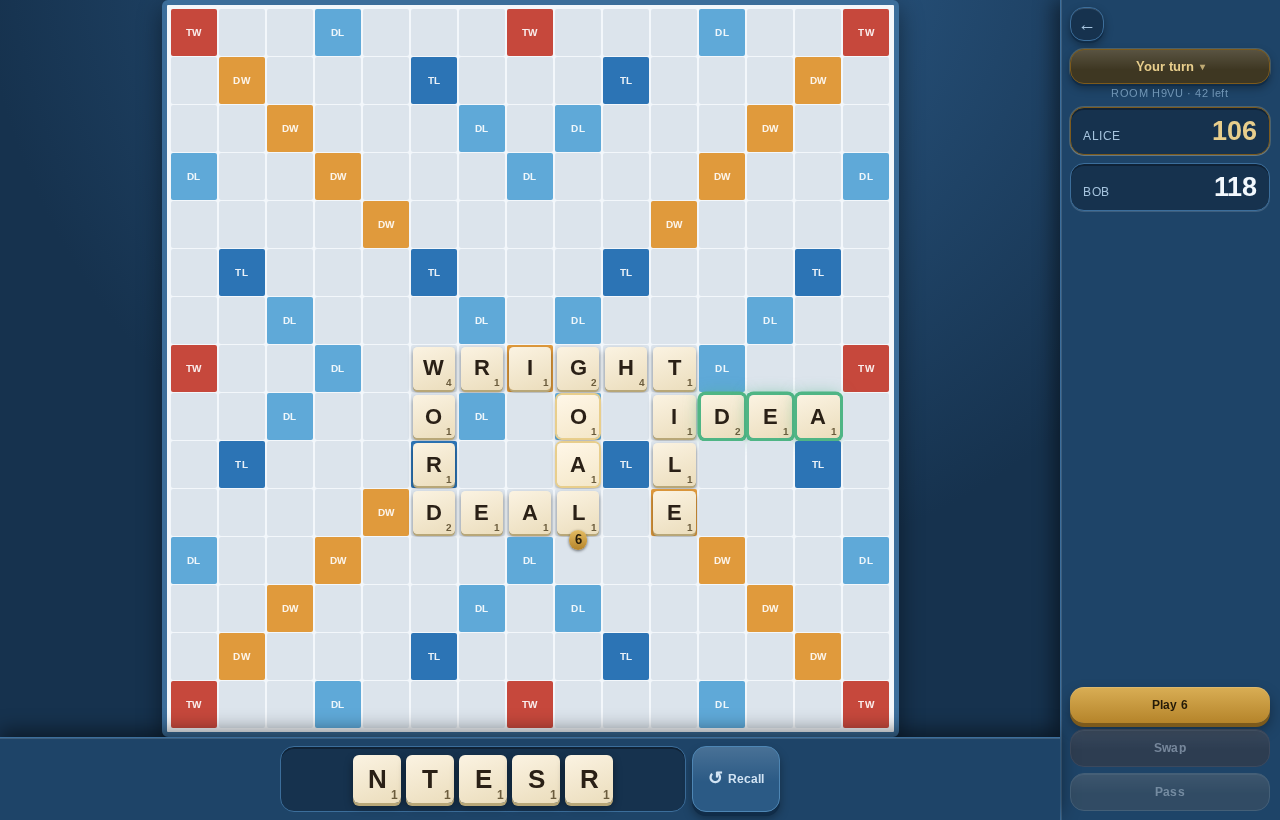
It plays on whatever's in your hand
A game like this is played on a phone at lunch and a tablet on the sofa, so signing in is a name and a four-digit PIN and nothing else — no email, no password reset, no verification. It exists so that your games find you: pick up any device, sign in, and everything you have going is in the list, on whichever board you left it.
The board is always the largest square the screen will spare, with everything you press along the edge nearest your hand and everything you only read along the far one. Turn a phone sideways or open it on a desktop and the controls stand up beside the board instead of stacking above and below it, which is what buys a wide screen a bigger board rather than a wider one.
Add it to a home screen and it opens without browser chrome and notifies you when it's your turn. The push machinery is about two hundred lines of PHP doing the encryption itself, so the notification goes from my server to your phone without a notification service in the middle wanting an account.
How it's built
- One HTML file — the entire client: board, tiles, drag layer, animations. Inline CSS, inline JS, no framework, no build step, no dependencies.
- One PHP file — the API, backed by SQLite. Clients poll it every three seconds, so a move appears on the other screen on its own.
- A service worker and a manifest — what makes it installable, and what keeps the word list on the phone instead of re-fetching it on every launch. Delete the whole layer and the game still plays.
- Deployment is copying a folder onto any PHP host. No config, no environment, no container, no database to provision.
Play it
- Wordwright — grab a friend, one of you makes a game and reads out the room code